Why Custom Electric Motors Are Revolutionizing Truck Performance
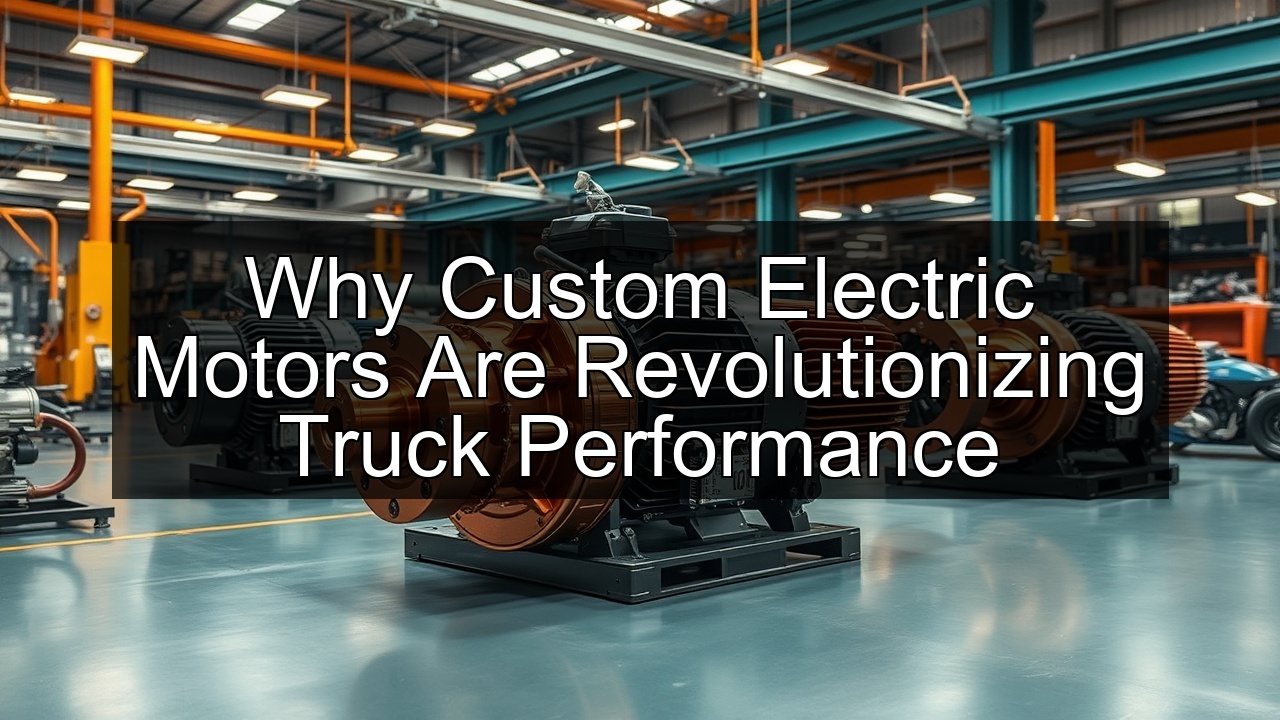
The Rise of Custom Electric Motors in Truck Performance
Understanding Electric Motors in Trucks
Custom electric motors are redefining the capabilities of trucks, enhancing their performance, efficiency, and reliability. Electric motors convert electrical energy into mechanical energy, powering the vehicle's movement without the need for traditional combustion engines. In trucks, these electric motors facilitate not only propulsion but also auxiliary systems, improving functionality and reducing emissions. With the growing emphasis on sustainability and fuel efficiency, manufacturers increasingly adopt electric solutions. Custom motors allow for specific adjustments tailored to the truck's requirements, providing optimal performance in various conditions. This customization addresses the unique demands of different trucking applications, from heavy hauling to urban deliveries, ensuring superior performance and adaptability.
Benefits of Custom Electric Motors for Truck Efficiency
Custom electric motors offer numerous benefits that significantly enhance truck efficiency. First, they reduce energy consumption, translating to lower operational costs. Electric motors deliver high torque at lower speeds, making them ideal for heavy loads. Unlike traditional engines, they have fewer moving parts, which results in lower maintenance costs and improved reliability. Additionally, custom designs can optimize the weight and size of the motor, leading to better space utilization within the truck chassis. Customization enables engineers to tweak performance characteristics, such as acceleration and top speed, allowing businesses to design trucks that meet specific operational needs. This level of adaptability is crucial in an industry where performance can make or break productivity.
Types of Custom Electric Motors Used in Trucks
Brushless DC Motors: The Preferred Choice
Brushless DC motors (BLDC) have emerged as the preferred choice for custom electric motors in trucks, thanks to their efficiency and longevity. Unlike traditional brushed motors, BLDC motors eliminate the need for brushes, reducing friction and wear. This design enhances the motor's lifespan and performance. The ability to provide high torque at various speeds makes brushless DC motors ideal for different trucking applications, from city delivery trucks to long-haul vehicles. Moreover, BLDC motors offer excellent control, allowing for precise throttle response and smoother operation. Their compatibility with regenerative braking systems further enhances energy efficiency, making them an optimal choice for modern trucking solutions. As the trucking industry continues to evolve, the reliance on brushless DC motors is expected to grow.
Alternating Current vs. Direct Current Motors
When considering custom motors for trucks, understanding the differences between alternating current (AC) and direct current (DC) motors is vital. DC motors provide a straightforward design with simple speed control, making them easy to implement. However, they typically require more maintenance due to the wear of brushes and commutators. In contrast, AC motors, particularly synchronous and induction motors, offer higher efficiency and performance over extended periods, which is essential for long-haul trucking. While AC motors may require more complex control systems, their durability and efficiency often justify the investment. Many manufacturers lean towards AC motors for custom applications, especially when high performance and reliability become paramount in truck design.
Synchronous vs. Induction Motors: A Comparative Analysis
Synchronous and induction motors represent two pivotal categories in electric motor design, each with distinct advantages for truck applications. Synchronous motors maintain a constant speed regardless of load, making them ideal for applications requiring precision and consistency. Their ability to operate efficiently at varying speeds enhances performance during different driving conditions. Conversely, induction motors are renowned for their robustness and simplicity, making them suitable for standard trucking applications where high torque and reliability are essential. They provide excellent performance in both low and high-speed ranges, making them versatile for various truck models. Customization allows manufacturers to select the appropriate motor type based on specific operational needs, ensuring optimal efficiency and performance throughout the vehicle's lifespan.
Manufacturing and Precision Engineering of Customized Motors
The Role of Precision Engineering in Motor Creation
Precision engineering plays a critical role in the manufacturing of custom electric motors for trucks. This process involves designing and producing components with exact specifications to ensure optimal performance. Factors such as material selection, component alignment, and manufacturing tolerances directly affect the motor's efficiency, reliability, and lifespan. Advanced techniques like computer-aided design (CAD) and computer numerical control (CNC) machining allow engineers to achieve the high precision required in motor fabrication. Precision engineering not only enhances the performance of custom motors but also facilitates the integration of advanced technologies like regenerative braking and telemetry systems, which further optimize truck efficiency. As the demand for customized solutions rises, precision engineering continues to be a cornerstone of motor development.
Inventory Management for Custom Motor Production
Effective inventory management is crucial for the production of custom electric motors. Manufacturers face the challenge of balancing the demand for customized motors with the need for efficient production processes. Maintaining a well-organized inventory of raw materials and components enables manufacturers to respond swiftly to customer orders, ensuring timely delivery of high-quality products. Implementing just-in-time (JIT) inventory systems can significantly reduce waste and storage costs while improving production flexibility. Additionally, advanced tracking systems can help monitor inventory levels and forecast future needs based on market trends. By optimizing inventory management, manufacturers can enhance the production of custom electric motors, meeting the specific demands of the trucking industry effectively.
Future Trends: Custom Motors in Truck Technology
Integration of Servo Motors for Enhanced Control
The integration of servo motors in truck technology represents a significant trend in enhancing vehicle control and performance. Servo motors provide precise control over speed and position, making them ideal for applications requiring high accuracy, such as automated steering systems or advanced driver-assistance systems. These motors can adapt rapidly to changes in load and driving conditions, offering a smoother and more responsive driving experience. As trucking technology evolves, the demand for greater precision and control will drive the adoption of servo motors in custom electric motor designs. This shift will not only enhance vehicle performance but also improve safety and efficiency in various trucking applications, ensuring that trucks are equipped to meet modern demands.
The Impact of Generators in Custom Electric Motor Systems
Generators play a pivotal role in the functionality of custom electric motor systems in trucks. These devices convert mechanical energy back into electrical energy, allowing for enhanced energy management and efficiency. In hybrid or fully electric trucks, generators can recharge batteries during operation, extending the vehicle's range without needing frequent stops for charging. This integration supports the growing trend of sustainability in transportation, reducing the carbon footprint of trucking operations. Customizing generators to work seamlessly with electric motors ensures optimal performance, allowing for real-time energy recovery and distribution. As the industry continues to innovate, the synergy between custom motors and generators will drive advancements in truck technology, leading to more efficient and eco-friendly transportation solutions.